A wave is a regular oscillation that transmits energy through space. According to the wave theory of light, light is a particular kind of electromagnetic wave. This wave is visible to humans. The studies on diffraction and interference were used as the earliest examples of how light behaves like a wave.
One of these two processes—luminescence or incandescence—is used to produce light. In contrast to luminescence, which occurs when excited electrons fall to the ground energy level, incandescence is the emission of light from heated materials.
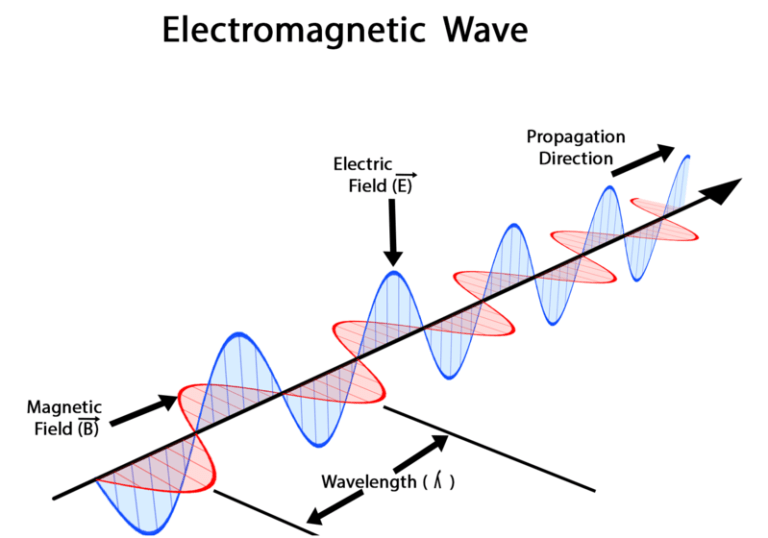
Light, as same as all other electromagnetic waves, can travel through a vacuum. Also, it is periodic, which means it is repeated regularly in both space and time. Similar to other waves, light also has a wavelength (the distance between two waves), frequency (the number of waves that occur per unit time) and a speed (around 3 x 10⁸ m/s).
What Does Light Have a Particle Nature?
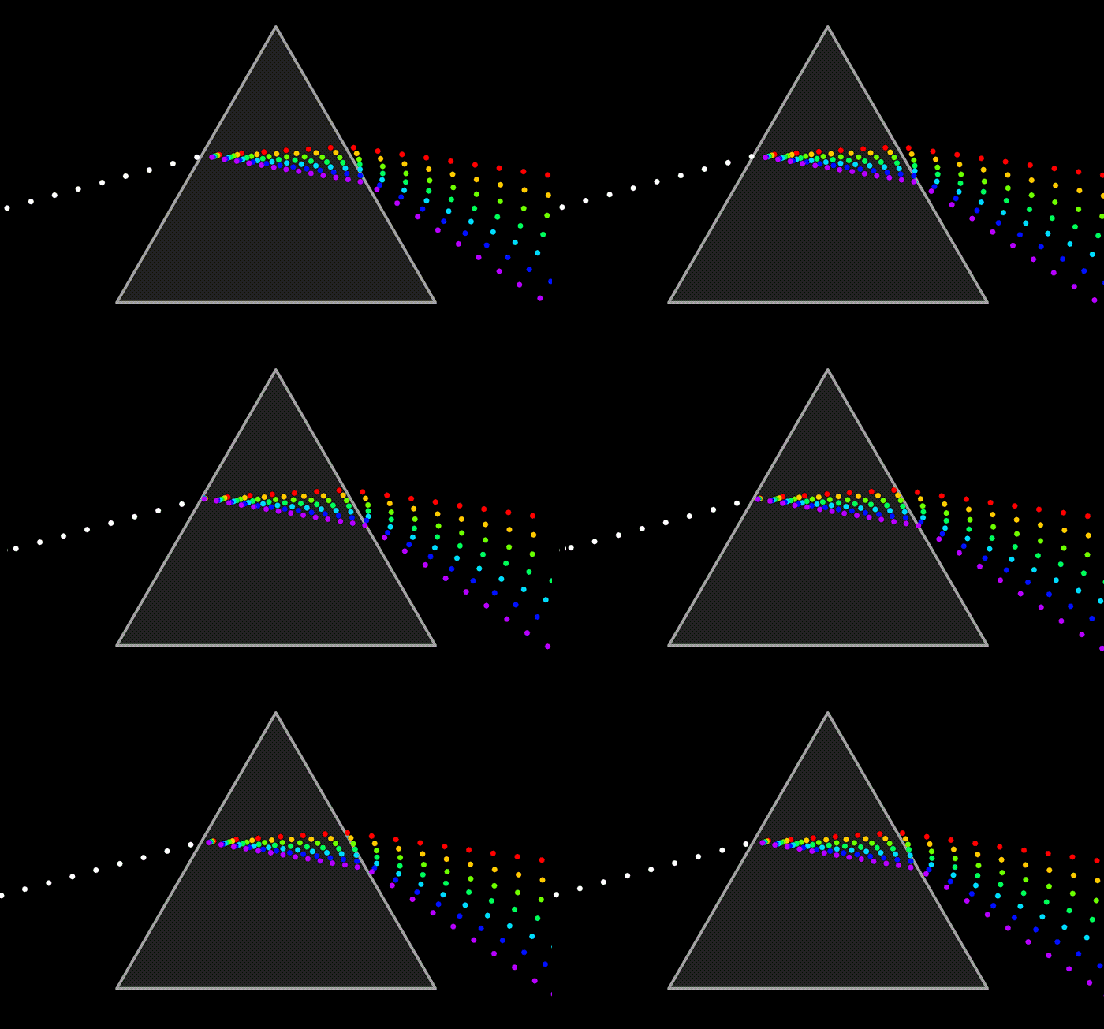
An item of matter is a particle. Yet, as light is a particle, we refer to light particles as photons. Sir Isaac Newton said in 1700 that light is a collection of particles because the edges of the shadows he cast when he used a prism to separate sunlight into its various colours were incredibly crisp and sharp. A photon is a unit of light and an elementary particle. The equation E = hv, where energy equals E, h is the Planck’s constant, and v is the speed of light, can be used to determine the energy of a photon. Thus, increasing light intensity means accelerating the rate at which photons cross a surface per unit of time. A photon is also a particle with no mass, but it is

 "Explore, Engage, and Embrace: Unleash the Curiosity within and Discover Your Universe of Activities!"