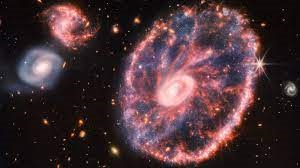
The observable universe is the part of the universe that we can see from Earth. It is estimated to be about 93 billion light-years in diameter and contains at least 2 trillion galaxies. The edge of the observable universe is not a physical boundary, but rather a boundary of what we can observe.

The universe is believed to be expanding, which means that the distance between galaxies is increasing over time. This expansion also affects the observable universe. As the universe expands, the light from distant galaxies is stretched, causing them to appear redder, a phenomenon known as redshift.
The most distant objects we can currently observe have a redshift of around 11, which means they are around 13.7 billion light-years away from us. Beyond this distance, the light from objects would be stretched so much that it would fall outside the observable spectrum, making them impossible to detect with current technology.
It is believed that there may be more universe beyond the observable universe, but we currently have no way to observe it. Some theories suggest that the universe may be infinite in size, while others propose a finite size.
In summary, the edge of our observable universe is the furthest point that we can currently observe, and it is not a physical boundary. Beyond this point, the universe may continue to exist, but it is beyond our current observational capabilities.
Introduction
The universe is vast and complex, and our understanding of it is continually evolving.
One of the most intriguing aspects of the universe is its edge or boundary.
The Observable Universe
The observable universe is the portion of the universe that we can see from Earth.
It is estimated to be around 93 billion light-years in diameter and contains at least 2 trillion galaxies.
The edge of the observable universe is not a physical boundary, but rather a limit of what we can observe.
Expansion of the Universe
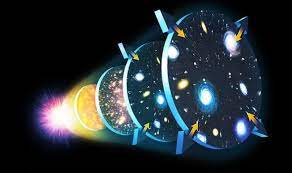
The universe is believed to be expanding, which means that the distance between galaxies is increasing over time.
This expansion also affects the observable universe, causing distant galaxies to appear redshifted.
The Edge of the Observable Universe
The most distant objects we can currently observe have a redshift of around 11, which means they are around 13.7 billion light-years away from us.
Beyond this distance, the light from objects would be stretched so much that it would fall outside the observable spectrum, making them impossible to detect with current technology.
The edge of our observable universe is the furthest point that we can currently observe, and it is not a physical boundary.
The Possibility of More Universe Beyond the Observable Universe
It is believed that there may be more universe beyond the observable universe, but we currently have no way to observe it.
Some theories suggest that the universe may be infinite in size, while others propose a finite size.
The true nature of the universe beyond the observable universe remains a subject of ongoing research and speculation.
The Big Bang Theory
The most widely accepted explanation for the origin of the universe is the Big Bang theory.
According to this theory, the universe began as a singularity, a point of infinite density and temperature, and has been expanding ever since.
Cosmic Microwave Background Radiation

The cosmic microwave background radiation (CMB) is a remnant of the early universe and is considered the “fossil” radiation from the Big Bang.
It was discovered in 1964 and is one of the strongest pieces of evidence supporting the Big Bang theory.
The CMB is uniform in all directions, indicating that the universe was once in a state of high energy density and temperature.
Dark Energy and Dark Matter
Dark energy and dark matter are two mysterious phenomena that are believed to make up a significant portion of the universe.
Dark energy is thought to be responsible for the acceleration of the universe’s expansion, while dark matter is believed to exert gravitational forces on visible matter, holding galaxies together.
Despite extensive research, the nature of dark energy and dark matter remains largely unknown.
The Multiverse Theory
The multiverse theory is the idea that there may be multiple universes, each with its own physical laws and properties.
This theory is still largely speculative, but some versions of it suggest that our universe may be just one among an infinite number of parallel universes.
Theoretical Limits to Observation
Even if we had the most advanced technology and observational capabilities, there are still theoretical limits to what we can observe in the universe.
One of these limits is the cosmic event horizon, which is the point beyond which we cannot see due to the expansion of the universe.
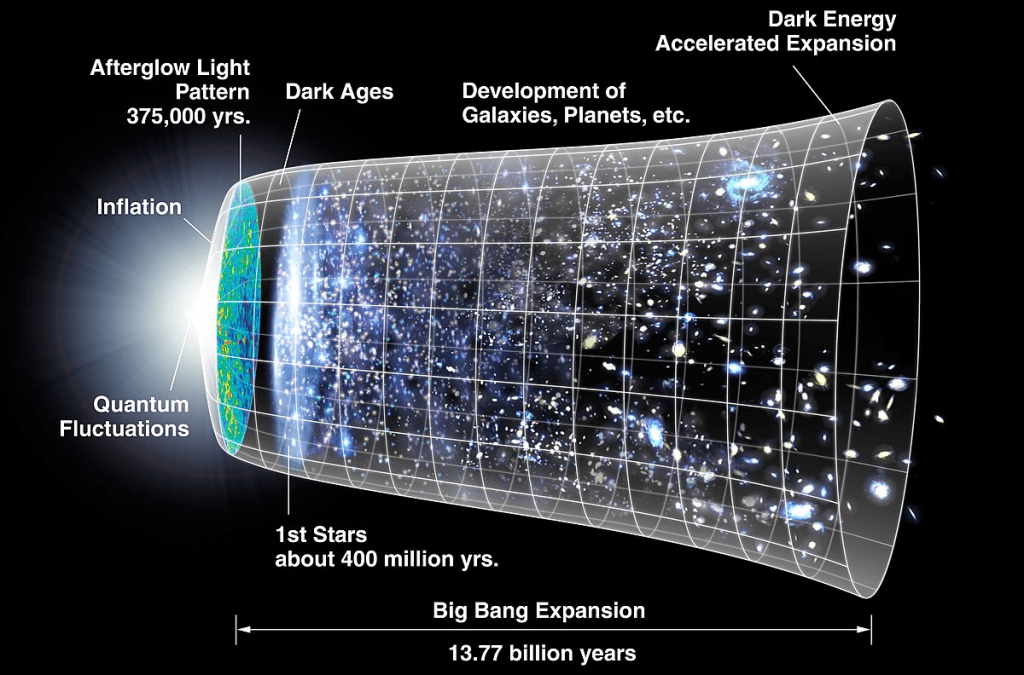
Another limit is the particle horizon, which is the distance beyond which particles have not had enough time to reach us since the beginning of the universe.
The Fate of the Universe
Depending on the amount of matter and energy in the universe, the expansion of the universe may continue indefinitely or eventually slow down and reverse.
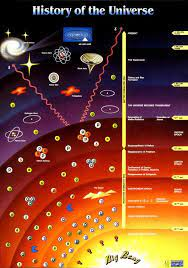
If the expansion continues, the universe will continue to grow and cool, eventually becoming a cold, dark, and empty place.
If the expansion slows down and reverses, the universe will eventually collapse in on itself, leading to a “Big Crunch.”
The Edge of Time
The edge of the observable universe is not only the furthest point we can currently observe, but it also represents the edge of time.
Because the universe is believed to have originated in a Big Bang, the edge of the observable universe is also the point beyond which we cannot see the earliest moments of the universe’s history.
The Importance of Understanding the Edge of the Universe
Studying the edge of the universe is essential for understanding the origins and evolution of the universe.
By studying distant galaxies and the cosmic microwave background radiation, scientists can learn about the conditions of the early universe and how it has evolved over time.
Understanding the edge of the universe is also important for developing theories about the universe’s future and our place in it.
Gravitational Waves
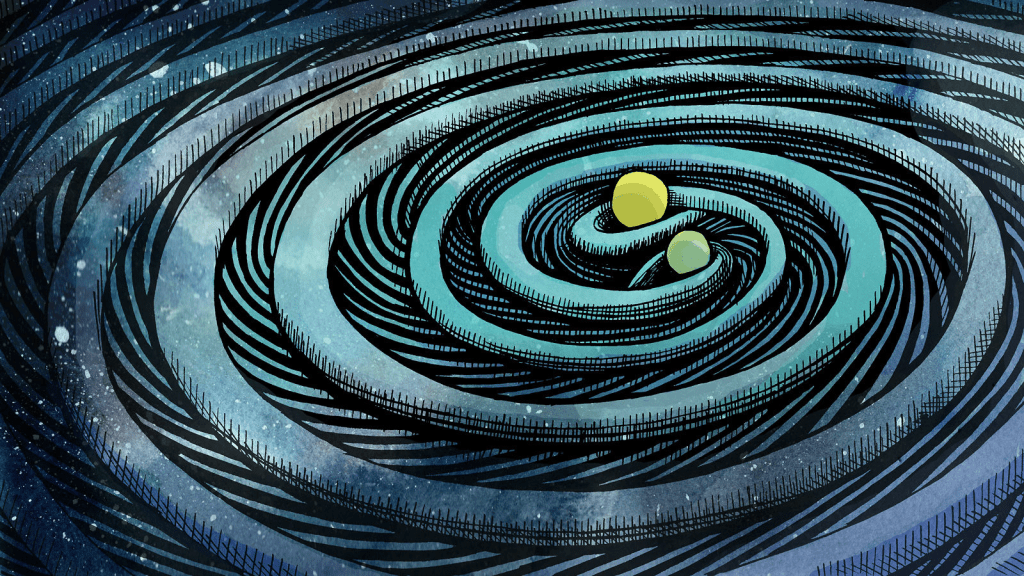
Gravitational waves are ripples in the fabric of spacetime caused by the acceleration of massive objects, such as black holes and neutron stars.
The detection of gravitational waves in 2015 by the LIGO collaboration provided a new way to study the universe and has opened up new avenues of research into the edge of the universe.
Black Holes
Black holes are incredibly dense objects that exert an immense gravitational pull, to the extent that not even light can escape.
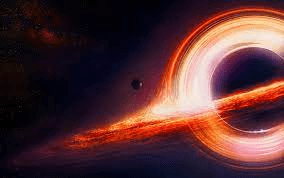
The study of black holes can provide insights into the universe’s edge, as they are thought to be key players in the evolution of galaxies and the structure of the universe.
Cosmic Inflation
Cosmic inflation is a period of exponential expansion of the universe that occurred in the first fractions of a second after the Big Bang.
While the concept of inflation is widely accepted, there is still much debate about the details of how it occurred and how it relates to the edge of the universe.
Theories of Everything
Theories of everything are attempts to unify all fundamental forces and particles in the universe into a single, coherent framework.
The discovery of the Higgs boson in 2012 was a significant step forward in this quest, and ongoing research in areas such as string theory and quantum gravity may provide further insights into the nature of the universe and its edge.
The Search for Extraterrestrial Life
The edge of the universe is not only important for understanding our own place in the cosmos, but also for the search for extraterrestrial life.
By studying exoplanets and the conditions necessary for life, scientists can gain insights into the likelihood of life elsewhere in the universe and the potential boundaries of life in the universe.
The Multiverse Hypothesis
The multiverse hypothesis is a theoretical concept that suggests there may be multiple universes existing alongside our own.
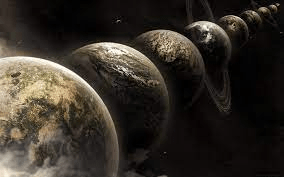
Some versions of the multiverse hypothesis suggest that each universe may have its own set of physical laws and constants, potentially leading to vastly different realities.
Dark Matter and Dark Energy
Dark matter and dark energy are two mysterious substances that are thought to make up the majority of the mass-energy content of the universe.
While their exact nature is still unknown, studying the effects of dark matter and dark energy can provide insights into the structure and evolution of the universe.
The Great Attractor
The Great Attractor is a region of space located in the direction of the Centaurus constellation that appears to be exerting a gravitational pull on nearby galaxies.
The nature of the Great Attractor is still not fully understood, and some theories suggest it may be a massive collection of galaxies or a supermassive black hole.
The Search for Dark Galaxies
Dark galaxies are hypothesized to exist in the universe, consisting of vast amounts of dark matter and little or no visible matter.
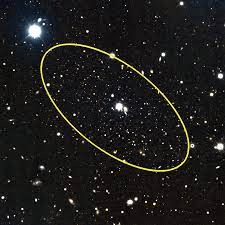
The search for dark galaxies can provide insights into the nature of dark matter and the structure of the universe.
The Cosmic Web
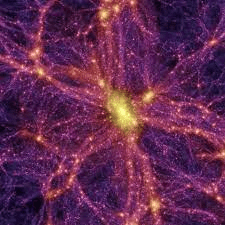
The cosmic web is a vast network of interconnected filaments of gas, dust, and dark matter that make up the large-scale structure of the universe.
Studying the cosmic web can provide insights into the evolution of the universe and the distribution of matter and energy.
The Ultimate Fate of the Universe
The ultimate fate of the universe is still unknown, and it may depend on factors such as the amount of dark matter and dark energy in the universe.
Some theories suggest that the universe may continue to expand indefinitely, while others propose a Big Crunch or a Big Freeze scenario.
The Observable Universe
The observable universe is the portion of the universe that we can see from Earth, limited by the distance that light has had time to travel since the Big Bang.
The current estimate for the size of the observable universe is approximately 93 billion light-years in diameter.
The Hubble Ultra-Deep Field
The Hubble Ultra-Deep Field is an image of a small patch of sky taken by the Hubble Space Telescope, revealing thousands of distant galaxies.

The image provides a glimpse into the early universe, as some of the galaxies in the image are seen as they were just a few hundred million years after the Big Bang.
The Cosmic Microwave Background
The cosmic microwave background (CMB) is the afterglow of the Big Bang, a faint radiation that permeates the entire universe.
Studying the CMB can provide insights into the early universe, including the conditions just moments after the Big Bang.
The Age of the Universe
The current estimate for the age of the universe is approximately 13.8 billion years, based on observations of the CMB and the expansion rate of the universe.
This age provides a timeline for the evolution of the universe, from the first few fractions of a second after the Big Bang to the present day.
The Large Hadron Collider
The Large Hadron Collider (LHC) is a particle accelerator located in Geneva, Switzerland, designed to study the fundamental nature of matter and energy.
The LHC has made significant discoveries in particle physics, including the discovery of the Higgs boson, and may provide further insights into the nature of the universe and its edge.
The James Webb Space Telescope
The James Webb Space Telescope is a large infrared telescope set to launch in 2021, designed to study the early universe, galaxies, and exoplanets.
The telescope may provide new insights into the nature of the universe’s edge, including the formation of the first galaxies and the conditions necessary for life.
The Inflationary Universe
The inflationary universe is a theory that suggests that the universe underwent a period of rapid expansion in the first fraction of a second after the Big Bang.
This rapid expansion may have solved some of the problems with the Big Bang theory, including the uniformity of the CMB.
The Fate of Black Holes
Black holes are incredibly dense objects with such strong gravitational forces that nothing can escape once it passes the event horizon.
The fate of black holes is still uncertain, with some theories suggesting they may evaporate over time due to Hawking radiation.
The Search for Extraterrestrial Life
The search for extraterrestrial life is an ongoing effort to discover whether there is life beyond Earth.
The discovery of life elsewhere in the universe would have significant implications for our understanding of the universe and our place in it.
The Fermi Paradox
The Fermi paradox is the apparent contradiction between the high probability of the existence of extraterrestrial civilizations and the lack of evidence for their existence.
There are many proposed solutions to the Fermi paradox, ranging from the possibility of a “Great Filter” that prevents the development of intelligent civilizations to the idea that we may simply not be looking in the right places.
The Limits of Human Knowledge
While we have made great strides in our understanding of the universe, there are still many mysteries and questions that remain unanswered.
The limits of human knowledge may prevent us from ever fully understanding the nature of the universe’s edge and the mysteries that lie beyond.
Multiverse Theory
The multiverse theory suggests that there may be many universes, each with its own set of physical laws and properties.
This theory is still speculative and has yet to be proven, but it offers a potential explanation for some of the mysteries of the universe, such as the apparent fine-tuning of physical constants.
Dark Energy
Dark energy is a mysterious force that is causing the expansion of the universe to accelerate.
The nature of dark energy is still unknown, and its existence challenges our understanding of the universe and its edge.
The Great Attractor
The Great Attractor is a region of space located around 250 million light-years from Earth that is pulling galaxies towards it.
The nature of the Great Attractor is still uncertain, but it may provide insights into the large-scale structure of the universe.
The End of the Universe
The ultimate fate of the universe is still uncertain, with several possibilities including a “Big Freeze” where the universe continues to expand until all energy is evenly distributed, and a “Big Crunch” where the universe collapses back in on itself.
The end of the universe is a topic of much research and speculation, and its resolution may have significant implications for our understanding of the nature of the universe’s edge.
The Role of Philosophy in Understanding the Universe
While much of our understanding of the universe comes from empirical observation and scientific research, philosophy also has an important role to play in our understanding of the nature of the universe’s edge and the mysteries that lie beyond.
Philosophical debates around topics such as the nature of time, causality, and free will can provide insights into the nature of the universe and its edge.
Conclusion
The edge of the universe remains a rich and fascinating topic of research and exploration, encompassing many different areas of inquiry.
As our technology and understanding of the universe continue to advance, we can expect to gain even more insights into the nature of the universe’s edge and the mysteries that lie beyond.

 "Explore, Engage, and Embrace: Unleash the Curiosity within and Discover Your Universe of Activities!"