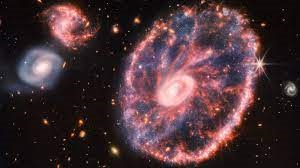
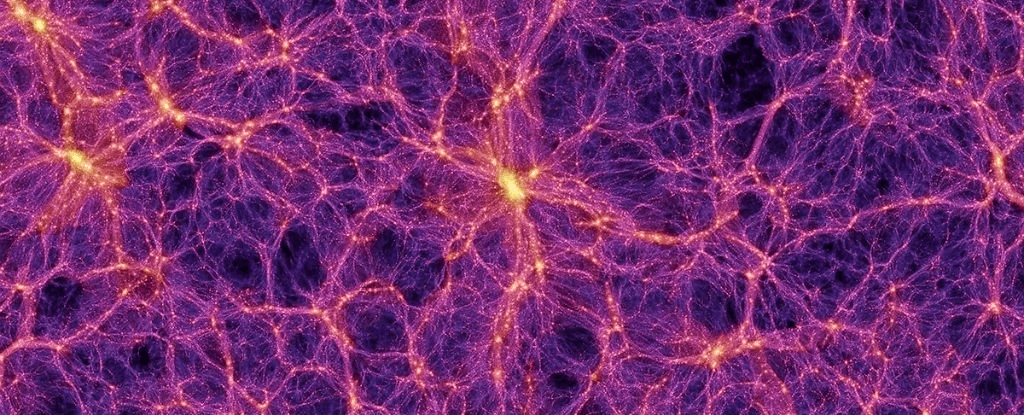
The cosmic web is a large-scale structure of the universe, composed of massive filaments of galaxies and intergalactic gas separated by vast voids. It is one of the most striking features of the universe and has been studied extensively by astronomers and astrophysicists.
Introduction:
The cosmic web refers to the distribution of matter on the largest scales in the universe. It is composed of a network of filamentary structures that span hundreds of millions of light-years and connect the galaxies and clusters of galaxies.
Formation:
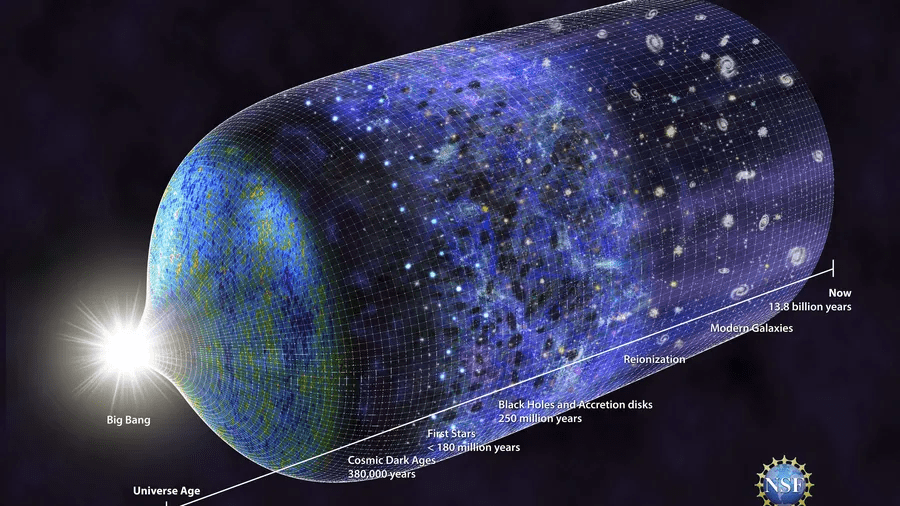
The cosmic web formed through a process known as cosmic structure formation, which began shortly after the Big Bang. As the universe expanded and cooled, tiny fluctuations in the density of matter began to grow due to gravity. These fluctuations eventually led to the formation of massive clusters of galaxies and long, thin filaments of gas and dark matter that form the backbone of the cosmic web.
Structure:
The cosmic web is composed of three main components: filaments, voids, and clusters. Filaments are the long, thin structures that connect galaxies and clusters, while voids are the vast regions of space between filaments. Clusters are the largest structures in the cosmic web and can contain hundreds or even thousands of galaxies.
Dark Matter:
The cosmic web is primarily composed of dark matter, which is a mysterious substance that makes up approximately 85% of the matter in the universe. Dark matter is not directly observable but can be detected through its gravitational influence on visible matter.
Galaxy Formation:
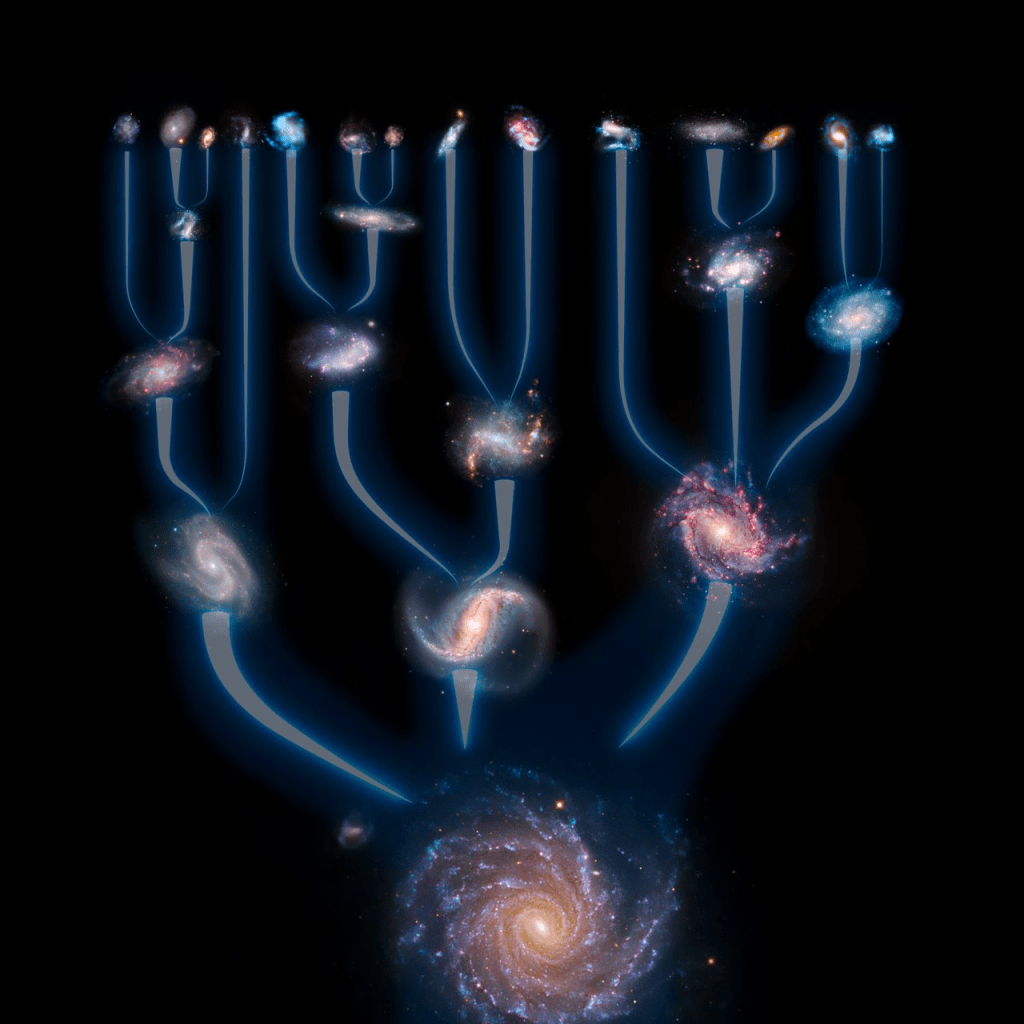
Galaxies form at the intersection of filaments, where the density of matter is highest. As gas and dark matter flow along the filaments, they accumulate in these dense regions and eventually collapse under their own gravity to form galaxies.
Large-Scale Structure Surveys:
Astronomers have studied the cosmic web extensively using large-scale structure surveys, which map the distribution of galaxies and dark matter on the largest scales. These surveys have revealed the intricate structure of the cosmic web and have provided important insights into the formation and evolution of galaxies.
Future Research:
The cosmic web remains an active area of research in astrophysics, with scientists continuing to study its structure and evolution using a variety of observational and theoretical techniques. New surveys and telescopes, such as the upcoming Nancy Grace Roman Space Telescope and the Vera C. Rubin Observatory, are expected to provide even more detailed views of the cosmic web in the coming years.
The cosmic web is a fascinating and complex structure that spans the entire observable universe. Its intricate network of filaments, voids, and clusters provides important clues about the nature of dark matter, the formation of galaxies, and the evolution of the universe as a whole.
Baryonic Matter:
Although the cosmic web is primarily composed of dark matter, it also contains a small fraction of baryonic matter, which is the ordinary matter that makes up stars, planets, and other visible objects. Baryonic matter is concentrated in the galaxies and clusters of the cosmic web, and it is also present in the hot gas that fills the voids.
Cosmic Microwave Background:
The cosmic microwave background (CMB) is a relic radiation left over from the Big Bang, which provides a snapshot of the universe when it was only 380,000 years old. The CMB contains tiny fluctuations in temperature and polarization that are thought to be the seeds of the cosmic web.
Cosmic Web Simulations:
Astrophysicists use computer simulations to study the formation and evolution of the cosmic web. These simulations incorporate the laws of gravity, fluid dynamics, and other physical processes to model the growth of structure from the early universe to the present day.
Cosmic Web Mysteries:
Despite the progress that has been made in understanding the cosmic web, there are still many mysteries surrounding its formation and evolution. For example, scientists are still trying to determine the exact nature of dark matter and how it interacts with other forms of matter. They are also trying to understand the role of supermassive black holes and other astrophysical phenomena in shaping the cosmic web.
Implications for Cosmology:
The study of the cosmic web has important implications for our understanding of cosmology, which is the study of the origin, evolution, and structure of the universe. By studying the large-scale structure of the cosmic web, scientists can test theoretical models of the universe and gain insights into the fundamental nature of space, time, and matter.
The cosmic web is a fascinating and complex structure that holds many secrets about the nature of the universe. With ongoing advances in observational and theoretical techniques, scientists are sure to make many more discoveries about this mysterious network of filaments, voids, and clusters in the years to come.
Multi-Wavelength Observations:
To study the cosmic web, astronomers use a variety of telescopes and instruments that observe different wavelengths of light. For example, optical telescopes observe the visible light emitted by galaxies, while radio telescopes observe the radio waves emitted by gas and dust in the cosmic web. By combining observations from different wavelengths, astronomers can construct a more complete picture of the cosmic web and its properties.
Galaxy Redshift Surveys:
One of the most important tools for studying the cosmic web is the galaxy redshift survey. This technique involves measuring the redshift of galaxies, which is a shift in their spectral lines caused by the expansion of the universe. By measuring the redshift of galaxies in different directions, astronomers can map out the large-scale structure of the cosmic web.
Cosmic Web Topology:
The topology of the cosmic web refers to the arrangement of filaments, voids, and clusters on large scales. Recent studies have shown that the cosmic web has a complex, fractal-like structure that is shaped by the nonlinear gravitational interactions between dark matter and gas.
Cosmic Web as a Bridge:
The cosmic web not only connects galaxies and clusters, but it also serves as a bridge between different fields of astronomy and physics. For example, studies of the cosmic web have important implications for particle physics, as they provide constraints on the properties of dark matter and the nature of the early universe.
Cosmic Web as a Test of Gravity:
The study of the cosmic web also provides an important test of the laws of gravity on the largest scales. By comparing observations of the cosmic web with theoretical models of gravity, astronomers can test alternative theories of gravity and search for deviations from Einstein’s theory of general relativity.
Cosmic Web and Dark Energy:
The cosmic web also holds important clues about the nature of dark energy, which is the mysterious force that is driving the accelerated expansion of the universe. By studying the large-scale structure of the cosmic web, scientists can probe the effects of dark energy on the growth of structure and test theoretical models of its properties.
Cosmic Web and Galaxy Formation:
The cosmic web plays a key role in the formation and evolution of galaxies. Galaxies form from the gas and dust that is drawn into the cosmic web by the gravitational pull of dark matter. As this gas and dust is compressed by the gravitational forces of the cosmic web, it can collapse to form stars and galaxies. The cosmic web also provides the channels for the exchange of gas and material between galaxies.
Superclusters:
Superclusters are the largest structures in the cosmic web, consisting of multiple clusters of galaxies that are interconnected by filaments of dark matter and gas. Superclusters can span hundreds of millions of light-years and contain thousands of galaxies.
Great Attractor:
The Great Attractor is a region of the cosmic web that exerts a gravitational pull on nearby galaxies and clusters, including our own Milky Way galaxy. Despite its name, the Great Attractor is not a single object but a complex region of dark matter and gas.
Cosmic Web and Large-Scale Structure:
The cosmic web is part of the larger structure of the universe, which includes clusters and superclusters of galaxies, as well as voids and sheets of dark matter and gas. By studying the large-scale structure of the universe, scientists can gain insights into the evolution of the cosmos and the fundamental nature of the universe.
Future Observations:
Future observations of the cosmic web are expected to reveal even more about its properties and evolution. For example, upcoming surveys such as the Dark Energy Survey and the Large Synoptic Survey Telescope are expected to map out the cosmic web with unprecedented detail and provide new insights into the nature of dark matter and dark energy.
Cosmic Web and the Search for Extraterrestrial Life:
The study of the cosmic web also has implications for the search for extraterrestrial life. The interconnected filaments of the cosmic web could serve as conduits for the exchange of life-bearing material between galaxies, providing a potential pathway for the spread of life across the universe.
Cosmic Web and Gravitational Waves:
The cosmic web can also produce gravitational waves, ripples in the fabric of spacetime that are caused by the acceleration of massive objects. As galaxies and clusters move within the cosmic web, they can create gravitational waves that can be detected by sensitive instruments such as the Laser Interferometer Gravitational-Wave Observatory (LIGO).
Simulations:
Computer simulations are an important tool for studying the cosmic web, as they allow scientists to model the evolution of the universe and the growth of large-scale structure over billions of years. Simulations can incorporate complex physical processes such as gas dynamics, star formation, and feedback from supernovae, allowing scientists to test theoretical models of the universe and compare them with observations.
Dark Matter and the Cosmic Web:
Dark matter plays a crucial role in the formation and evolution of the cosmic web. The filaments and voids of the cosmic web are thought to be shaped by the gravitational pull of dark matter, which dominates the overall mass of the universe. Understanding the properties of dark matter and its interactions with ordinary matter is therefore essential for understanding the cosmic web and its evolution.
Cosmic Web and the Formation of the First Stars and Galaxies:
The cosmic web is also important for understanding the formation of the first stars and galaxies in the early universe. The first galaxies are thought to have formed from the collapse of gas within the filaments of the cosmic web, and their formation and evolution are intimately connected to the properties of the cosmic web.
Cosmic Web and the Structure of the Universe:
The structure of the cosmic web is intimately linked to the overall structure of the universe. The cosmic web is part of a larger web-like structure that spans the entire cosmos, and its properties are shaped by the overall geometry and expansion of the universe.
Cosmic Web and the Evolution of the Universe:
Finally, the cosmic web holds important clues about the evolution of the universe as a whole. By studying the properties and evolution of the cosmic web, scientists can gain insights into the early history of the universe, the formation of structure, and the ultimate fate of the cosmos.


 "Explore, Engage, and Embrace: Unleash the Curiosity within and Discover Your Universe of Activities!"