Introduction
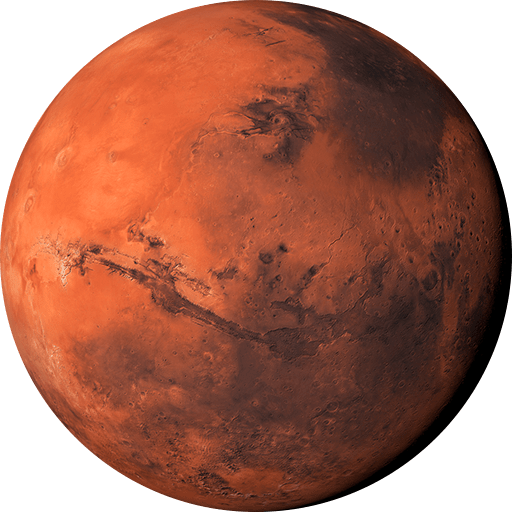
Mars is the fourth planet from the sun and is often referred to as the “Red Planet” due to its reddish appearance. It is a rocky, terrestrial planet with a thin atmosphere and is the second closest planet to Earth after Venus. It has fascinated astronomers for centuries and has been the subject of numerous space exploration missions.
Physical Characteristics
Mars has a diameter of approximately 6,779 kilometers, which is roughly half the size of Earth. It has a mass that is about one-tenth that of Earth and a gravity that is only about 38% of Earth’s gravity. Mars has a thin atmosphere composed mainly of carbon dioxide, with small amounts of nitrogen and argon.
Surface Features
Mars has a diverse range of surface features, including towering volcanoes, deep canyons, and ancient riverbeds. The planet also has two small moons, Phobos and Deimos, which are thought to be captured asteroids. One of the most prominent features on Mars is Olympus Mons, the largest volcano in the solar system, which stands at over 22 kilometers tall.
Climate
Mars has a cold, desert-like climate with average temperatures of around -63 degrees Celsius. The planet experiences large temperature swings, with temperatures ranging from -140 degrees Celsius at night to a maximum of 20 degrees Celsius during the day. Mars also experiences seasonal changes due to its axial tilt, which is similar to that of Earth.
Exploration
Mars has been the subject of numerous exploration missions, both by robotic probes and human spaceflight. The first successful mission to Mars was NASA’s Mariner 4 in 1965, which conducted a flyby of the planet. Since then, numerous missions have been sent to Mars, including the Viking missions in the 1970s, the Mars rovers Spirit and Opportunity, and the Mars Science Laboratory, which landed the rover Curiosity on the planet in 2012.
Potential for Life
Mars is considered to be one of the most promising planets for the discovery of life outside of Earth. While no direct evidence of life has been found on Mars, the planet has several characteristics that make it a potential habitat for life, including the presence of liquid water in the past, an atmosphere that could have protected life from harmful radiation, and evidence of organic molecules.
Future Exploration
There are several planned and proposed missions to Mars in the coming years, including the Mars 2020 mission, which will send another rover to the planet, and the planned Mars Sample Return mission, which aims to bring samples of Martian rock and soil back to Earth for analysis. Private companies, such as SpaceX, are also working on plans to send humans to Mars in the coming decades.
Mars is a fascinating planet with a unique set of characteristics and features. Despite the challenges of exploring this distant world, there is much interest and excitement about the potential discoveries that may be made on Mars in the future.
History and Geology
Mars has a long and complex geological history, with evidence of past volcanic activity, water erosion, and geological features similar to those found on Earth. Scientists believe that Mars may have had a thicker atmosphere and surface water in the past, which may have made the planet more habitable than it is today.
Atmosphere
Mars has a thin atmosphere that is approximately 1% the density of Earth’s atmosphere. The atmosphere is composed primarily of carbon dioxide, with small amounts of nitrogen and argon. Mars’ atmosphere is not capable of supporting human life as we know it, but it is thick enough to generate weather patterns and dust storms.
Magnetic Field
Unlike Earth, Mars does not have a global magnetic field, which means that the planet’s atmosphere is not protected from the solar wind. However, Mars does have localized magnetic fields, which are thought to be remnants of an ancient global magnetic field.
Moons
Mars has two small moons, Phobos and Deimos, which are irregularly shaped and thought to be captured asteroids. The moons are much smaller than Earth’s moon and are heavily cratered.
Exploration Challenges
Exploring Mars is challenging due to the planet’s distance from Earth, the harsh environment, and the need for sophisticated technology to survive and operate on the surface. The thin atmosphere also presents challenges for landing spacecraft on the surface, as it is not thick enough to provide the same level of atmospheric braking as Earth’s atmosphere.
Human Settlement
There is growing interest in the idea of human settlement on Mars, with plans being developed by government space agencies and private companies. However, settling on Mars presents numerous challenges, including the need for a self-sustaining habitat, protection from radiation, and the development of technologies to extract resources from the planet.
Significance for Science
Mars is significant for science as it provides a window into the history and geology of the solar system, and may hold clues to the origins of life in the universe. Mars is also a potential destination for future human exploration and settlement, which could have significant implications for the future of space exploration and human civilization.
In conclusion, Mars is a complex and fascinating planet that holds many mysteries and opportunities for scientific exploration and discovery. As we continue to learn more about Mars, we may gain a better understanding of the origins and evolution of the solar system, as well as the potential for life beyond Earth.
Water on Mars
One of the most exciting discoveries on Mars is the presence of water, both in the form of ice at the poles and in underground reservoirs. In 2015, NASA announced the discovery of flowing water on Mars during the summer months, suggesting that liquid water may still exist on the planet.
Martian Seasons
Mars has four distinct seasons, which are caused by the planet’s axial tilt and its elliptical orbit around the sun. The seasons on Mars are more extreme than those on Earth, with longer winters and shorter summers. Mars’ axial tilt is also more variable than Earth’s, which can cause significant climate fluctuations.
Martian Dust Storms
Mars is known for its frequent dust storms, which can cover large portions of the planet and last for months. These storms are caused by strong winds, which can pick up dust particles and create massive dust clouds that can obscure the entire planet.
Martian Meteorites
Several meteorites that originated from Mars have been found on Earth. These meteorites provide valuable insights into the geology and history of Mars, as well as the potential for past or present microbial life on the planet.
Martian Colonization
Several organizations, including NASA and SpaceX, have plans to establish permanent human settlements on Mars in the coming decades. The challenges of Martian colonization are immense, and would require the development of self-sustaining habitats, advanced life support systems, and technologies to extract resources from the planet.
Search for Life
The search for life on Mars is one of the primary objectives of Mars exploration. While no direct evidence of life has been found on the planet, there are several areas of interest that could potentially host microbial life, including subsurface aquifers and geothermal hotspots.
Martian Moons
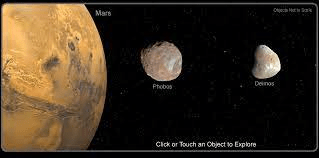
Mars has two small moons, Phobos and Deimos, which are thought to be captured asteroids. The largest of the two, Phobos, is only 22 kilometers (14 miles) across and orbits just 6,000 kilometers (3,700 miles) above Mars’ surface. Both moons have heavily cratered surfaces and are thought to be rich in carbonaceous materials.
Mars and Earth Comparison
Mars is often referred to as Earth’s “sister planet” due to its similar size and rocky composition. However, there are several key differences between the two planets, including Mars’ lack of a global magnetic field, thinner atmosphere, and lack of surface water.
Martian Rovers
Several robotic rovers have been sent to explore Mars, including NASA’s Mars rovers Spirit, Opportunity, and Curiosity, as well as the Chinese rover Zhurong. These rovers have provided valuable data and images of the Martian surface and geology, and have helped to pave the way for future human exploration.
Martian Mountains
Mars is home to several large mountain ranges, including the Tharsis Montes, which contains the highest peak in the solar system, Olympus Mons. This massive shield volcano stands 22 kilometers (14 miles) high and has a diameter of over 600 kilometers (370 miles).
Martian Dust Devils
In addition to dust storms, Mars is also known for its frequent dust devils, which are similar to tornadoes but are created by strong winds and temperature differentials rather than atmospheric pressure. These dust devils can be several kilometers high and can move at speeds of up to 110 kilometers per hour (68 miles per hour).
Martian Valleys
Mars is home to several large valleys, including Valles Marineris, which is the largest canyon in the solar system. This massive canyon stretches over 4,000 kilometers (2,500 miles) and is up to 7 kilometers (4 miles) deep in some places.
Martian Polar Ice Caps
Mars has two permanent ice caps at its poles, which are primarily made up of water ice and carbon dioxide ice. These ice caps play a key role in the planet’s climate and geology, and may also contain valuable resources for future human exploration and settlement.
Martian Geology
Mars has a complex geology that includes a range of features, including volcanoes, impact craters, mountains, and valleys. The study of Martian geology has provided valuable insights into the planet’s history and evolution, and may also offer clues about the potential for life on the planet.
Martian Atmosphere
Mars has a thin atmosphere that is primarily made up of carbon dioxide, with small amounts of nitrogen and argon. The atmosphere is too thin to support human life without significant life support systems, and also contributes to the extreme temperature fluctuations on the planet.
Martian Colonization Challenges
Establishing a permanent human settlement on Mars will require overcoming a range of challenges, including the harsh climate, lack of surface water, thin atmosphere, and radiation exposure. Solving these challenges will require significant technological advancements and innovative solutions.
Martian Seasons
Mars experiences seasonal changes due to its tilt and orbit around the sun. These changes are similar to those on Earth but are much more extreme due to the planet’s longer year and thinner atmosphere. Mars’ southern hemisphere experiences much more dramatic temperature changes than the northern hemisphere.
Martian Soil
Mars’ soil, also known as regolith, is made up of a mixture of dust, sand, and small rocks. The soil has a reddish-brown color due to the presence of iron oxide, also known as rust. Martian soil has been studied extensively by robotic missions and is considered a potential resource for future human exploration and settlement.
Martian Methane
Mars’ atmosphere contains small amounts of methane, which is a potential indicator of biological activity. While the origin of the methane is not yet fully understood, it may be produced by geological processes or by microbial life on the planet.
Martian Dust Storms
Mars is known for its frequent dust storms, which can cover large areas of the planet and last for weeks or months. These storms can be extremely dangerous for robotic and human missions, and can also impact the planet’s climate and geology.
Several space agencies and private companies are planning missions to explore Mars in the coming years. These missions include robotic missions to study the planet’s geology and potential for life, as well as human missions to establish a permanent settlement on the planet.
In summary, Mars is a complex and fascinating planet that offers many opportunities for scientific exploration and discovery. From its seasons and soil to its potential for life and human settlement, Mars presents many challenges and possibilities for future exploration and development.
Martian Dust Storms and Climate
The frequent dust storms on Mars have a significant impact on the planet’s climate. These storms can cause temperature changes, alter atmospheric composition, and impact the planet’s albedo (reflectivity), which affects how much sunlight is absorbed or reflected back into space.
Martian Magnetosphere
Unlike Earth, Mars does not have a strong global magnetic field. However, the planet does have localized magnetic fields in some areas, which can protect the surface from the solar wind and radiation. The lack of a strong magnetosphere is one of the reasons why Mars has lost much of its atmosphere over time.
Martian Crust and Mantle
Mars’ crust is primarily made up of volcanic rocks, while the mantle is thought to be partially molten. Studying the composition and structure of the crust and mantle can provide insights into the planet’s geologic history and the potential for past or present volcanic activity.
Martian Methane Mystery
The presence of methane in Mars’ atmosphere is a mystery that has yet to be fully explained. While the methane may be produced by geological processes, it is also a potential indicator of biological activity. Future missions to Mars will seek to better understand the origin and distribution of methane on the planet.
Martian Climate Change
Mars is also subject to climate change, both natural and potentially human-induced. Changes in the planet’s orbit or tilt can cause dramatic shifts in climate over long periods of time. Future human activities on Mars, such as terraforming or resource extraction, could also impact the planet’s climate and environment.
Martian Moons
Mars has two small moons, Phobos and Deimos, which are thought to be captured asteroids. These moons have irregular shapes and are covered in craters. They play a key role in the planet’s gravitational environment and may also provide resources for future human exploration and settlement.
Martian Resources
Mars has a variety of resources that may be valuable for future human exploration and settlement, including water ice, regolith (soil), minerals, and atmospheric gases. The extraction and use of these resources will be a key part of any sustained human presence on the planet.
Martian Atmosphere and Climate Models
Scientists use computer models to simulate Mars’ atmosphere and climate, which can help predict future changes and understand the planet’s past climate history. These models are based on

 "Explore, Engage, and Embrace: Unleash the Curiosity within and Discover Your Universe of Activities!"