Introduction:
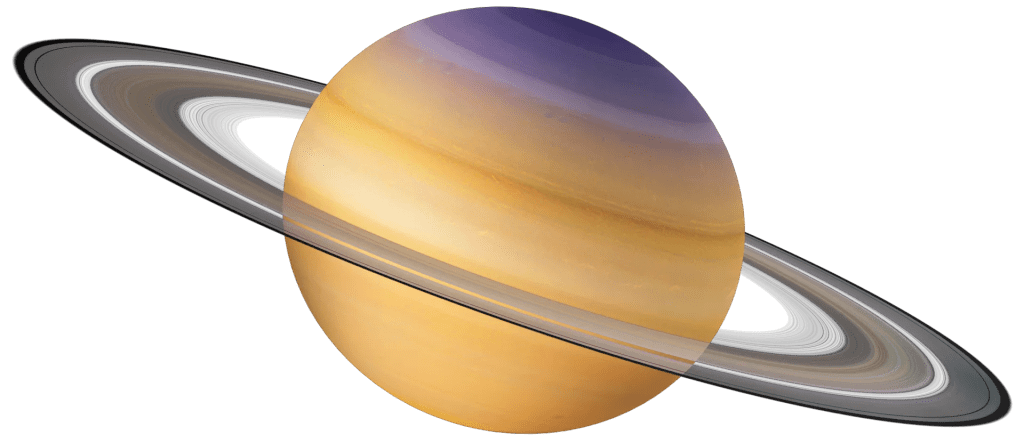
Saturn is the sixth planet from the Sun and the second largest planet in the Solar System, after Jupiter. It is a gas giant with a thick atmosphere primarily made up of hydrogen and helium.
Size:
Saturn has a diameter of about 116,460 kilometers, making it almost 9.5 times larger than Earth. It has a volume that is over 760 times greater than Earth’s volume.
Distance from the Sun:
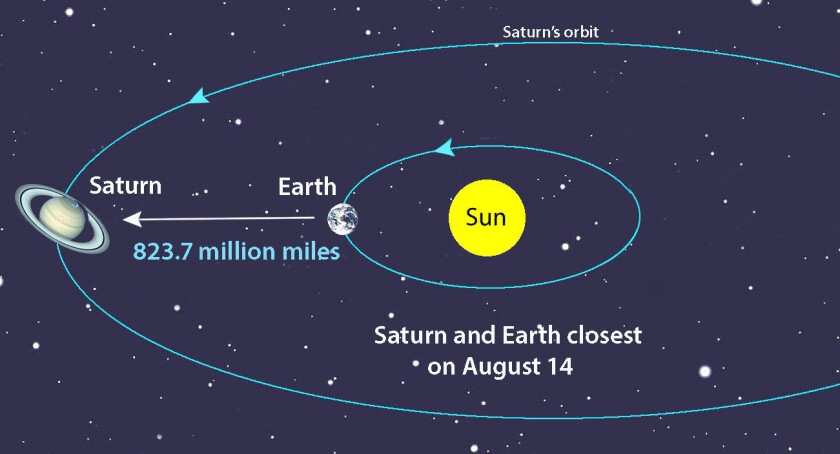
Saturn is located an average of about 1.4 billion kilometers (886 million miles) away from the Sun. It takes about 29.5 Earth years for Saturn to complete one orbit around the Sun.
Moons:
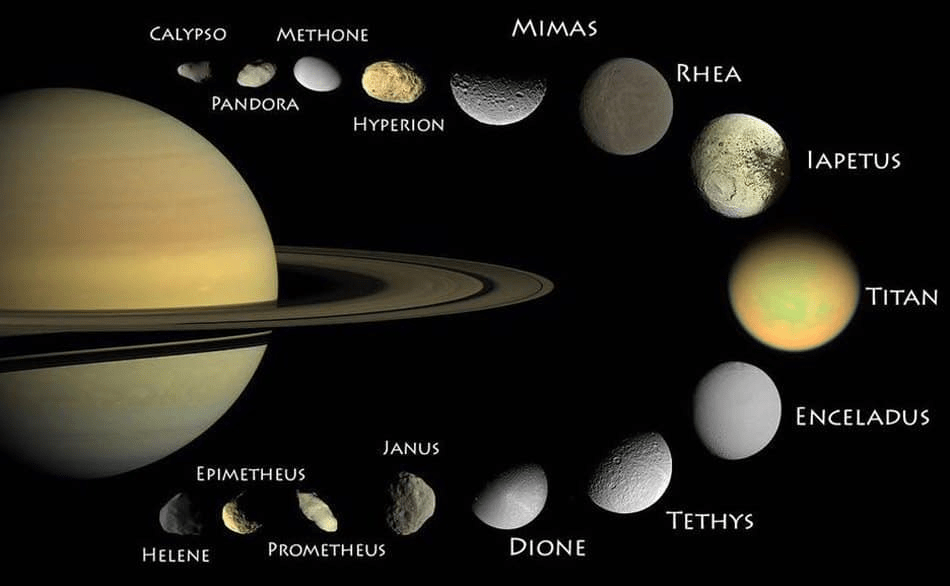
Saturn has at least 82 known moons, the most of any planet in our Solar System. Some of its notable moons include Titan, Enceladus, Mimas, and Rhea.
Atmosphere:
Saturn’s atmosphere is primarily made up of hydrogen and helium, with small amounts of methane and other gases. The planet’s distinctive bands and stripes are caused by winds in its upper atmosphere, which can reach speeds of up to 1,800 kilometers per hour.
Magnetic Field:
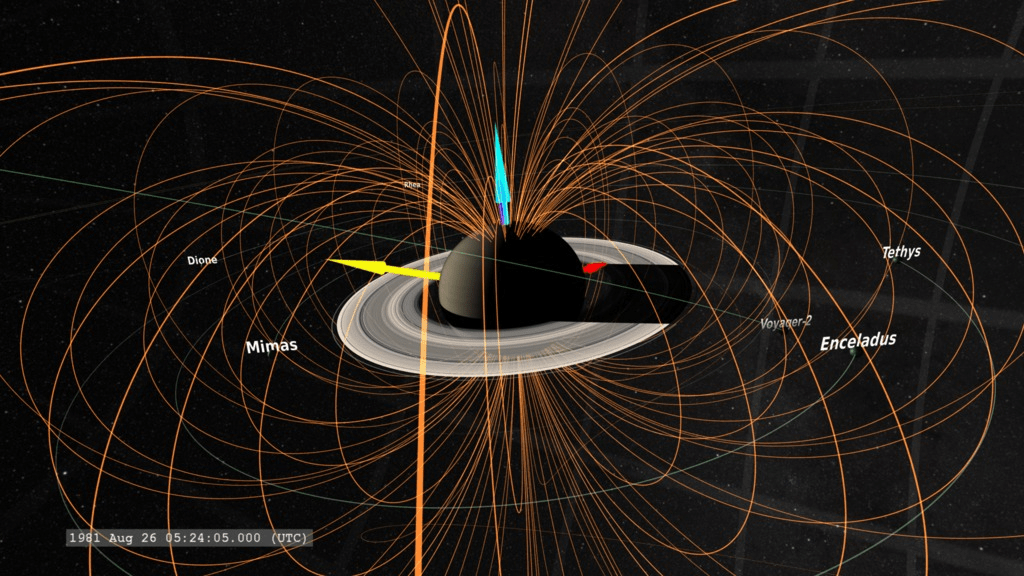
Saturn has a relatively weak magnetic field compared to Jupiter, but it is still about 578 times stronger than Earth’s magnetic field. The planet’s magnetic field is tilted at an angle of about 11 degrees to its rotation axis.
Temperature:
Saturn’s temperature varies depending on the location within its atmosphere. At the top of its clouds, temperatures can reach as low as -180 degrees Celsius, while closer to the planet’s core, temperatures can reach as high as 11,700 degrees Celsius.
Appearance:
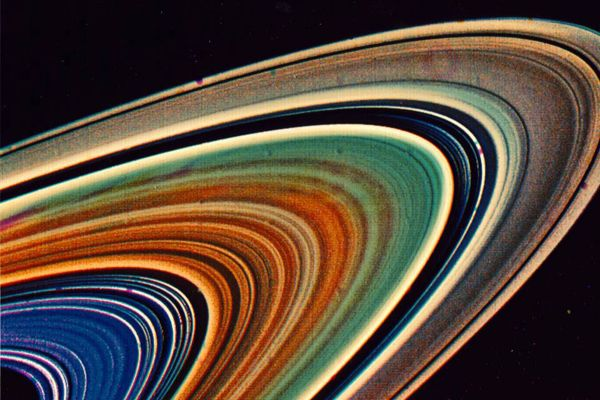
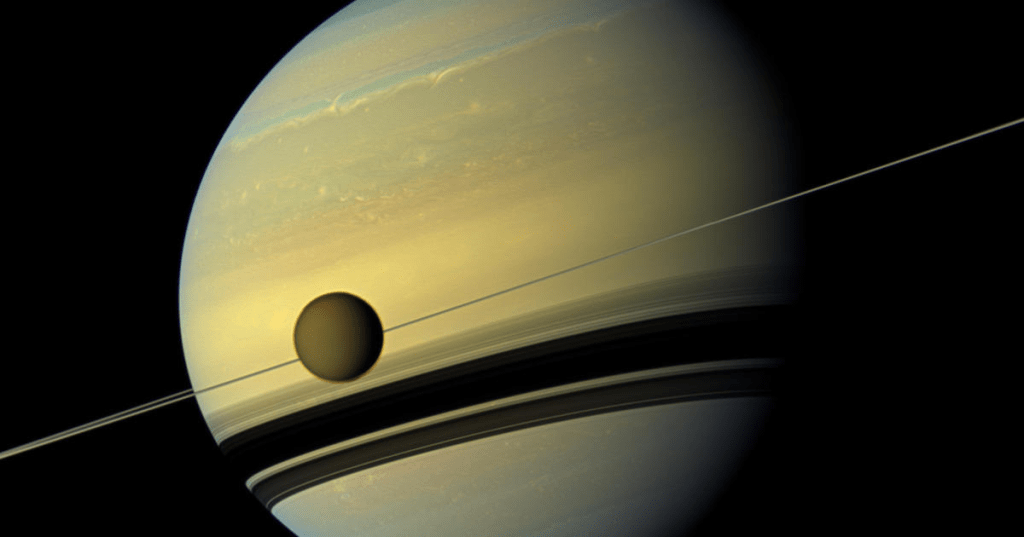
Saturn is easily recognizable due to its prominent rings, which are made up of ice particles and dust. The rings are divided into several distinct sections, each with its own unique characteristics.
Composition:
Saturn’s interior is believed to consist of a rocky core that is surrounded by a thick layer of metallic hydrogen, which is a form of hydrogen that acts like a metal under high pressure. Above the metallic hydrogen layer is a layer of molecular hydrogen that extends up to the planet’s atmosphere.
Gravity:
Saturn’s gravity is about 1.06 times the gravity on Earth, which means that objects on the planet’s surface would weigh slightly less than they do on Earth.
Seasons:
Like Earth, Saturn experiences seasons due to its axial tilt of 26.7 degrees. However, because Saturn’s year is so long, each season lasts for about 7.5 Earth years.
Aurora:
Saturn’s weak magnetic field still generates auroras, similar to Earth’s Northern and Southern Lights. The auroras on Saturn are more difficult to see than those on Earth because they occur at the planet’s poles, which are not easily visible from Earth.
Ring Formation:
The exact formation of Saturn’s rings is still a subject of debate among scientists. Some theories suggest that the rings are leftover material from the planet’s formation, while others suggest that they were formed by the breakup of a moon or by the collision of comets with the planet.
Ring Composition:
Saturn’s rings are made up of mostly water ice, with smaller amounts of rock and dust. The particles in the rings range in size from tiny grains to large boulders.
Ring Visibility:
The rings are visible from Earth with a small telescope, but they are not always visible because of the angle of the sunlight and the planet’s position in its orbit.
Exploration Discoveries:
The Cassini spacecraft, which orbited Saturn for over 13 years, discovered a vast ocean
Great White Spot:
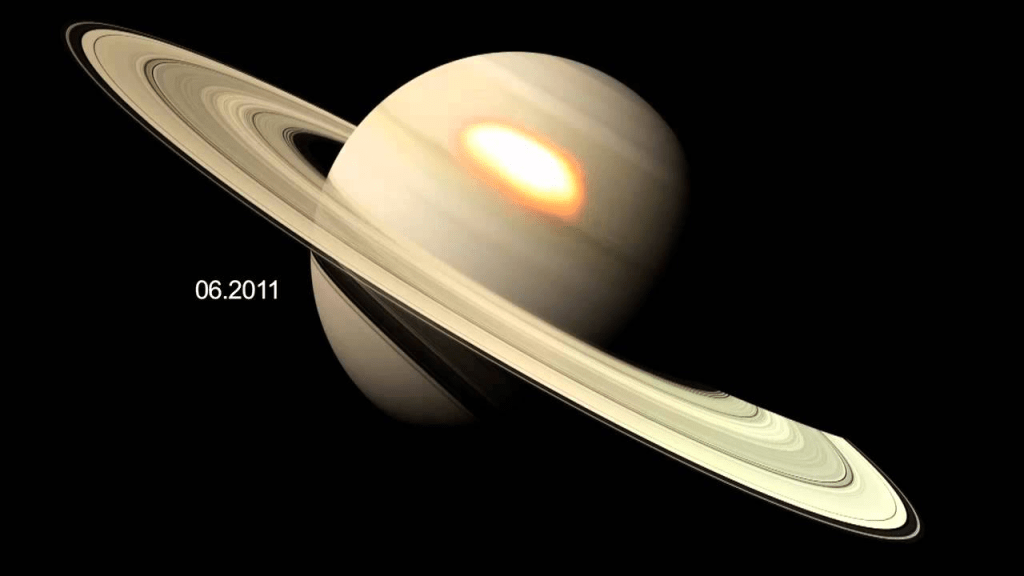
Saturn experiences periodic storms known as Great White Spots, which are massive disturbances in the planet’s atmosphere that can last for months. These storms are similar to Jupiter’s Great Red Spot, but occur less frequently.
Density:
Despite being a gas giant planet, Saturn has a lower density than water due to its composition. If you could find a bathtub big enough to hold Saturn, the planet would float!
Titan:
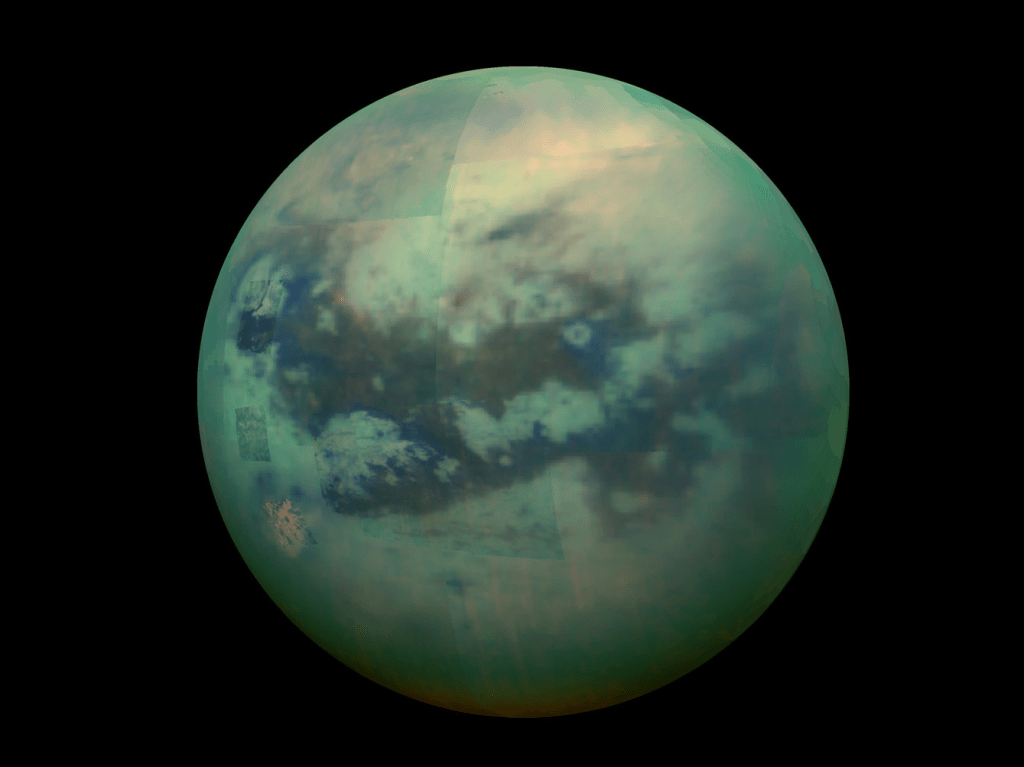
Titan, one of Saturn’s largest moons, is the only moon in our Solar System with a substantial atmosphere, which is mostly nitrogen with traces of methane and other gases. Titan’s atmosphere is so thick that it makes it difficult to see the surface from space.
Methane Lakes:
On Titan, there are lakes and seas made of liquid methane and ethane, which are believed to be similar to Earth’s water cycle. These lakes and seas are the only known bodies of liquid on any world other than Earth.
Rings Changing:
Saturn’s rings are not a static feature of the planet. They are constantly changing due to gravitational interactions with the planet’s moons, collisions between ring particles, and other factors.
Largest Moon:
Titan is Saturn’s largest moon and is the second largest moon in our Solar System after Jupiter’s Ganymede. It is even larger than the planet Mercury.
Seasons Affecting Moon:
Like Saturn, Titan also experiences seasons due to its axial tilt. These seasons can have a significant impact on the moon’s weather and atmospheric conditions.
Precession:
Saturn’s axis is tilted at an angle, and it also precesses, meaning that the direction of its axis changes over time. This causes changes in the planet’s seasons and climate over thousands of years.
Exploration:
Saturn has been visited by four spacecraft: Pioneer 11, Voyager 1, Voyager 2, and the Cassini-Huygens mission. These missions have provided a wealth of information about the planet’s rings, moons, and atmosphere.
Future Missions:
There are currently no planned missions to Saturn, but several proposals have been made for future missions, including a possible return to Titan to study its potential for hosting life.
Cultural Significance:
Saturn has been known since ancient times and has played a significant role in mythology and astrology. In Roman mythology, Saturn was the god of agriculture and harvest, and the planet was named after him. In astrology, Saturn is associated with discipline, responsibility, and restriction.

 "Explore, Engage, and Embrace: Unleash the Curiosity within and Discover Your Universe of Activities!"