Scienceking.tech.blog
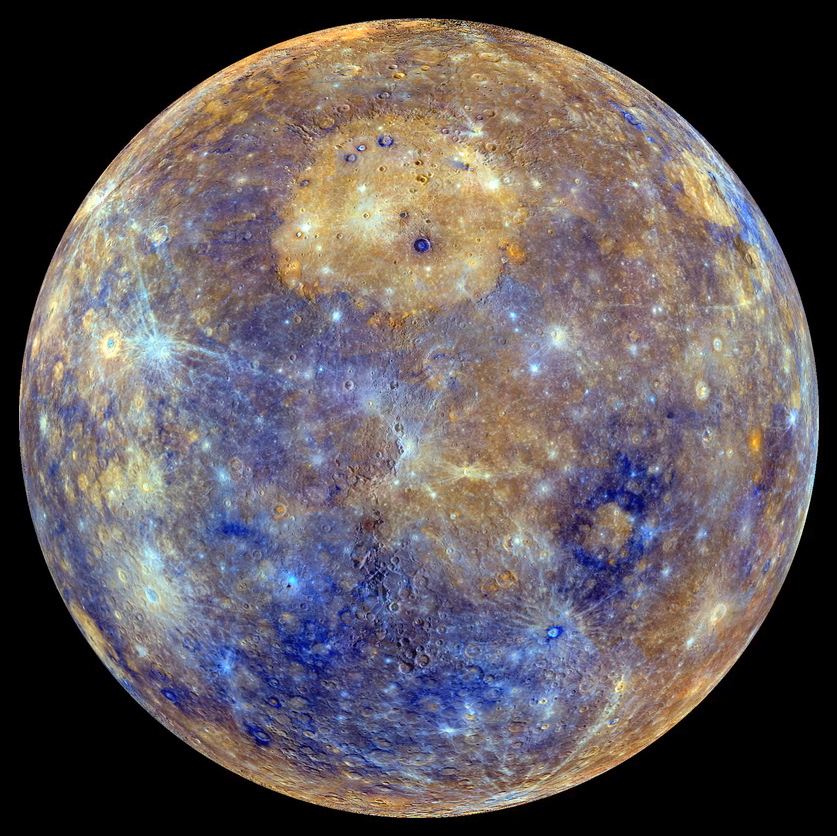
Mercury is the smallest planet in the Solar System, and also the closest to the Sun. Its proximity to the Sun and lack of atmosphere make it a challenging planet to explore. In this article, we will explore the features and facts about Mercury, as well as the history of its exploration.
Overview of Mercury:
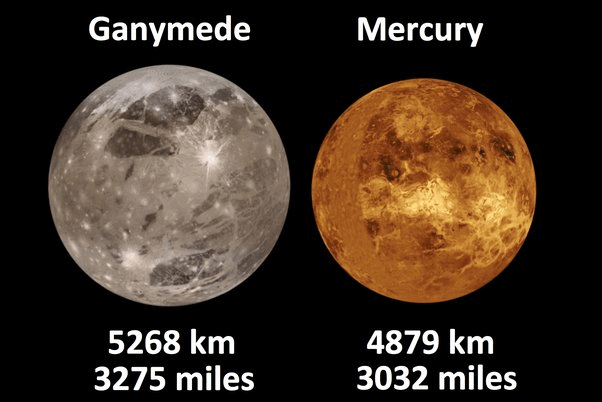
Mercury is the smallest planet in the Solar System with a diameter of only 4,880 km, about one-third the size of Earth. It orbits the Sun at a distance of about 58 million km, completing one orbit every 88 days. Due to its close proximity to the Sun, Mercury has the shortest orbital period of any planet in the Solar System.
Surface Features:
Mercury’s surface is heavily cratered, with vast plains and steep cliffs known as scarps. It has a rocky, barren terrain, with no signs of water or vegetation. The planet’s surface is also heavily bombarded by solar winds and cosmic radiation, which contribute to its eroded and pitted surface.
Atmosphere:
Unlike other planets in the Solar System, Mercury has virtually no atmosphere. The thin, tenuous exosphere is composed mostly of helium, hydrogen, and oxygen. The lack of atmosphere also means that Mercury has extreme temperature fluctuations, with daytime temperatures reaching up to 430°C (800°F), while nighttime temperatures can drop to -180°C (-290°F).
Exploration of Mercury:
The first spacecraft to visit Mercury was Mariner 10, launched by NASA in 1973. Mariner 10 made three flybys of Mercury, capturing detailed images of its surface and mapping its magnetic field. In 2011, NASA’s MESSENGER spacecraft became the first to orbit Mercury, completing several flybys and mapping the planet in unprecedented detail.
Interesting Facts about Mercury:
Mercury is named after the Roman messenger god.
A day on Mercury (the time it takes to complete one rotation on its axis) is longer than its year (the time it takes to orbit the Sun).
Mercury has a magnetic field, but it is much weaker than Earth’s.
Due to its proximity to the Sun, Mercury has been observed throughout history and was known to ancient civilizations.
In conclusion, Mercury may be small, but it is a fascinating planet with unique features and challenges. While much remains to be learned about this elusive planet, the exploration efforts of NASA and other space agencies have helped us to gain a better understanding of Mercury’s surface and composition.
Composition:
Mercury is a rocky planet, with a composition similar to Earth’s mantle. It is believed to have a large iron core, which makes up about 70% of its total mass. This dense core generates a weak magnetic field, which is about 1% as strong as Earth’s magnetic field.
Orbital Resonance:
Mercury’s orbit is unique in that it has a 3:2 spin-orbit resonance, meaning that it rotates three times on its axis for every two orbits around the Sun. This resonance has the effect of keeping Mercury’s surface temperature relatively constant, despite its proximity to the Sun.
Transit of Mercury:
A transit of Mercury occurs when the planet passes directly between the Sun and the Earth, casting a small shadow on the Sun’s surface. Transits of Mercury are rare, occurring about 13 times per century on average.
Potential for Future Exploration:
Although much has been learned about Mercury from the Mariner 10 and MESSENGER missions, there is still much to discover about this planet. The European Space Agency is planning to launch its own mission to Mercury, called BepiColombo, in 2024. This mission will involve two spacecraft, which will orbit Mercury and study its surface and composition in detail.
Search for Life:
Mercury is not considered a likely candidate for the search for extraterrestrial life, due to its lack of atmosphere and extreme temperature fluctuations. However, some scientists have suggested that there could be pockets of ice in the permanently shadowed craters at Mercury’s poles, which could potentially harbor microbial life.
Mercury is a small, rocky planet with a unique set of features and challenges. Despite its close proximity to the Sun and lack of atmosphere, it continues to fascinate scientists and space enthusiasts alike, and may hold the potential for future discoveries and exploration.
Impact Craters:
Mercury’s surface is heavily cratered due to its close proximity to the Sun, which exposes it to a constant barrage of meteoroids and asteroids. The planet has large impact basins, some of which are hundreds of kilometers in diameter. The Caloris Basin, located on Mercury’s equator, is one of the largest impact basins in the Solar System, with a diameter of over 1,500 km.
Tectonic Activity:
Mercury has a complex system of faults and ridges on its surface, which suggest that the planet has experienced significant tectonic activity in the past. The planet’s contraction due to cooling has caused its crust to fracture and buckle, resulting in the formation of scarps and ridges.
Mercury’s Moons:
Mercury has no natural satellites or moons, which is unusual for a planet in the Solar System. This is believed to be due to its proximity to the Sun, which makes it difficult for the planet to capture and hold onto any moons.
Importance for Understanding the Solar System:
Studying Mercury is important for understanding the formation and evolution of the Solar System. Because it is the smallest planet and the closest to the Sun, it is a unique laboratory for studying the processes that shape rocky planets in the inner Solar System. It also provides clues about the early history of the Solar System, when the planets were still forming.
Challenges of Exploration:
Exploring Mercury is a challenging task due to its proximity to the Sun and extreme temperature fluctuations. Spacecraft must be able to withstand the intense heat and radiation, as well as the extreme cold in the planet’s shadowed regions. The BepiColombo mission, which is set to launch in 2024, will use a combination of heat shields, radiation shields, and advanced cooling systems to protect its instruments and sensors during its journey to Mercury.
In conclusion, Mercury is a unique and fascinating planet with a complex history and set of features. Its close proximity to the Sun makes it a challenging target for exploration, but the information gained from studying this planet is invaluable for understanding the formation and evolution of the Solar System.

 "Explore, Engage, and Embrace: Unleash the Curiosity within and Discover Your Universe of Activities!"