Matter and antimatter are fascinating and mysterious concepts in the world of physics. They are two types of particles that make up the universe, and they have the power to create and destroy each other. In this article, we will explore what matter and antimatter are, how they were discovered, and why they are important.
What is Matter?
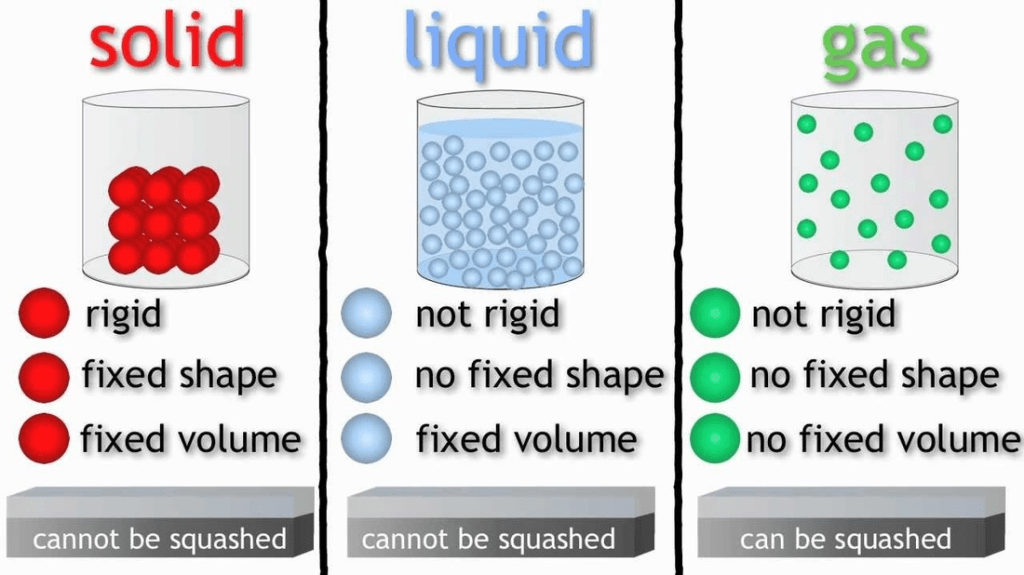
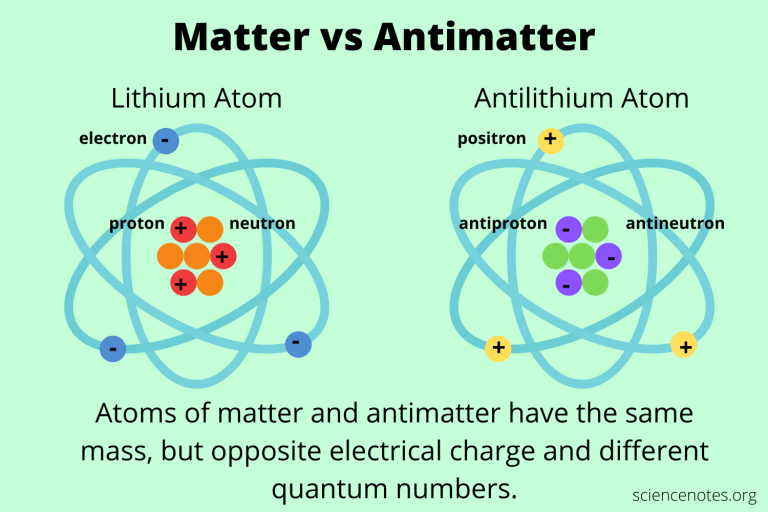
Matter is anything that has mass and takes up space. It can exist in various forms, such as solids, liquids, and gases. Matter is made up of atoms, which are the basic building blocks of all matter. Atoms are composed of protons, neutrons, and electrons. Protons have a positive charge, neutrons have no charge, and electrons have a negative charge. The number of protons in an atom determines what element it is.
What is Antimatter?
Antimatter is a type of matter that has the opposite charge of normal matter. For example, the antimatter counterpart of an electron is a positron, which has a positive charge. When matter and antimatter come into contact with each other, they annihilate each other, releasing energy in the form of gamma rays. This process is called annihilation.
Discovery of Antimatter
Antimatter was first predicted by the physicist Paul Dirac in 1928. He proposed that for every particle of matter, there was an antiparticle with the same mass but opposite charge. It wasn’t until 1932 that the first antiparticle, the positron, was discovered by Carl Anderson in a cloud chamber.
Importance of Antimatter
Antimatter is important in understanding the fundamental laws of physics. The Standard Model of particle physics predicts that particles and antiparticles should be created in equal amounts during the Big Bang. However, we observe that there is an asymmetry in the amount of matter and antimatter in the universe. This is known as the baryon asymmetry problem and is still an open question in physics.
Antimatter also has practical applications, such as in medical imaging. Positron emission tomography (PET) scans use positrons to create images of the inside of the body. Antimatter is also being studied as a potential source of energy for spacecraft.
Matter and antimatter are two fundamental components of the universe. They have opposite charges and can annihilate each other, releasing energy. Antimatter was first predicted by Paul Dirac in 1928 and discovered in 1932. Antimatter is important in understanding the fundamental laws of physics and has practical applications in medical imaging and space exploration. The study of matter and antimatter continues to be an active area of research in physics.
Matter and Antimatter in the Universe: As mentioned earlier, the universe seems to have more matter than antimatter, which is a puzzle that physicists are still trying to solve. If matter and antimatter were created in equal amounts during the Big Bang, why did they not annihilate each other completely, leaving a universe of pure energy? This is known as the baryon asymmetry problem, and it’s one of the biggest unanswered questions in physics.
Antimatter Production: Antimatter can be produced in a laboratory, but it’s not an easy task. One method involves colliding high-energy particles with a target to create a shower of particles, some of which may be antimatter. Another method involves using particle accelerators to create antiparticles directly. The process of creating antimatter requires a lot of energy and is expensive, which is why it’s not yet used as a practical energy source.
Applications of Antimatter: Besides medical imaging and space exploration, antimatter has other potential applications. For example, it could be used to create ultra-sensitive sensors for detecting radiation or to study the properties of subatomic particles. There’s even speculation that antimatter could be used as a fuel source for interstellar travel, although this is still purely theoretical.
Antimatter in Science Fiction: Antimatter has captured the imaginations of science fiction writers for decades. In Star Trek, for example, the starship Enterprise is powered by antimatter, which is stored in special containers called “warp cores.” In Dan Brown’s novel Angels and Demons, the villain steals a canister of antimatter from CERN and threatens to use it as a weapon. While some of the details may be exaggerated for dramatic effect, the basic principles of antimatter are rooted in real science.
Matter and antimatter are two sides of the same coin, with opposite charges that can annihilate each other. While the study of these particles has led to important discoveries and practical applications, there is still much we don’t know about their properties and behavior. As researchers continue to probe the mysteries of matter and antimatter, we may uncover new insights into the nature of the universe itself.
Antimatter and Cosmic Rays: Cosmic rays are high-energy particles that constantly bombard the Earth from space. Some of these particles are antimatter, which can be detected by scientists using specialized detectors. Studying cosmic rays can help scientists understand more about the properties of antimatter and the universe as a whole.
Antimatter and the Future of Energy: While antimatter is not yet used as a practical energy source, scientists are studying ways to harness its power. One potential method is called antimatter catalyzed fusion, which uses small amounts of antimatter to initiate a fusion reaction. This could potentially provide a clean and efficient source of energy, although it’s still in the experimental stages.
Matter-Antimatter Asymmetry: As we’ve already mentioned, one of the biggest puzzles in physics is the matter-antimatter asymmetry. While we observe more matter than antimatter in the universe, the laws of physics suggest that they should have been created in equal amounts during the Big Bang. Solving this puzzle could help us understand more about the fundamental forces of the universe.
Antimatter in Science Education: Antimatter is often used as a topic of study in science education, as it can help students understand concepts such as particle physics, energy, and mass. Some schools even have antimatter-themed science clubs, where students can learn more about this fascinating subject.
Antimatter and Science Communication: Antimatter has also been used in science communication to help explain complex scientific concepts to the public. For example, CERN (the European Organization for Nuclear Research) has created several online games and apps that use antimatter as a central theme, helping to engage and educate people about the world of particle physics.
In summary, matter and antimatter are fascinating subjects that have captured the imagination of scientists and the public alike. While there is still much we don’t know about these particles, they have already led to important discoveries and practical applications. Whether we are studying the mysteries of the universe or using antimatter to power our spacecraft, this is a subject that will continue to fascinate and inspire us for years to come.
Antimatter and Medical Imaging: Antimatter has been used in medical imaging, particularly in the form of positron emission tomography (PET) scans. In a PET scan, a small amount of a radioactive substance is injected into the patient, which emits positrons that can be detected by a scanner. This can help doctors diagnose and monitor various diseases, such as cancer.
Antimatter and Antigravity: While antimatter is not known to have antigravity properties, some theories suggest that it could be used to create antigravity effects. For example, if antimatter were to be suspended in a gravitational field, it would experience a repulsive force due to its negative gravitational mass. However, this is still purely theoretical and has not yet been demonstrated experimentally.
Antimatter and Art: Antimatter has even been used as a subject of art, particularly in contemporary art and science collaborations. For example, the artist Ryoji Ikeda has created several installations that use antimatter as a theme, using sound and light to create immersive experiences that explore the nature of particles and energy.
Antimatter and Dark Matter: Dark matter is a mysterious substance that makes up around 27% of the universe, but we still don’t know what it is made of. While antimatter is not thought to be a major component of dark matter, it is still being studied as a possible candidate. If antimatter does make up a significant portion of dark matter, it could help explain some of the strange phenomena that we observe in the universe, such as the way galaxies rotate.
Antimatter and Philosophy: Finally, antimatter has also been a subject of philosophical inquiry. Some philosophers have used the concept of antimatter as a way to explore metaphysical questions, such as the nature of existence and the relationship between matter and consciousness. While these discussions may not have practical applications, they highlight the enduring fascination that antimatter holds for people across a range of disciplines.
In conclusion, matter and antimatter are incredibly versatile subjects that have been studied across a wide range of fields, from physics and astronomy to medicine and art. While there is still much we don’t know about these particles, they continue to inspire scientists, artists, and philosophers alike, and will no doubt lead to even more fascinating discoveries in the future.

 "Explore, Engage, and Embrace: Unleash the Curiosity within and Discover Your Universe of Activities!"