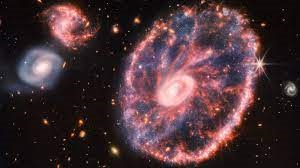
Dark matter is a mysterious substance that makes up around 27% of the total matter in the universe. It is called “dark” because it does not emit, absorb, or reflect light or any other form of electromagnetic radiation, making it invisible to telescopes and other astronomical instruments.
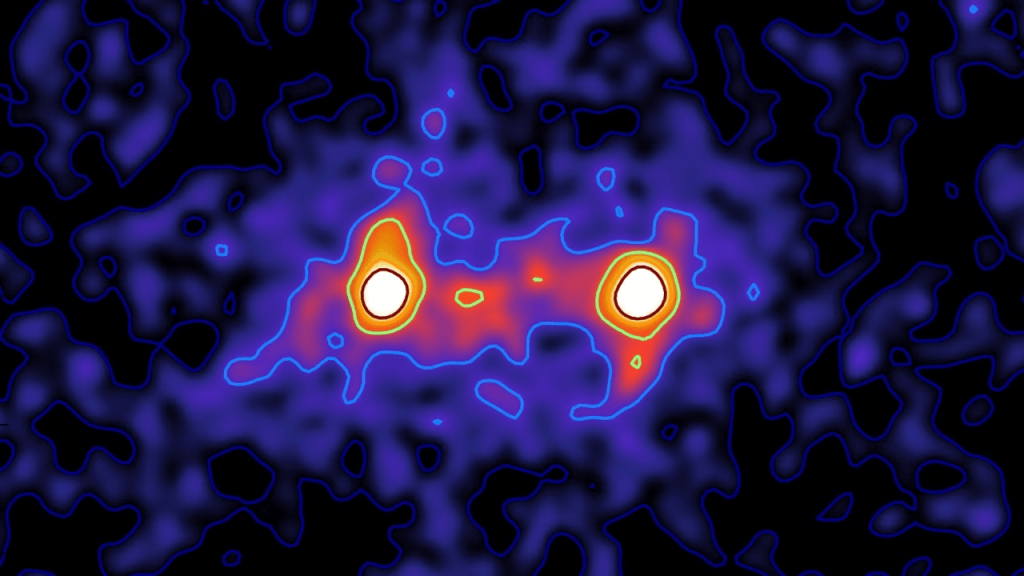
Despite its invisibility, astronomers have been able to detect the presence of dark matter through its gravitational effects on visible matter. Dark matter has a gravitational pull that is strong enough to affect the motion of galaxies, galaxy clusters, and even the large-scale structure of the universe.
Scientists have proposed several theories to explain the nature of dark matter, including the idea that it could be made up of undiscovered particles, such as Weakly Interacting Massive Particles (WIMPs) or Axions.
One way to visualize the effects of dark matter is through gravitational lensing, which occurs when the gravitational field of a massive object, such as a galaxy cluster, bends and distorts the light from more distant objects behind it. By studying the way that light is bent, astronomers can map the distribution of dark matter in the lensing object.
Another way to study dark matter is through computer simulations of the evolution of the universe. These simulations incorporate the effects of dark matter, as well as other known forms of matter and energy, and can help to test different theories of dark matter.
Despite decades of research, the exact nature of dark matter remains one of the biggest mysteries in astrophysics. However, ongoing efforts by scientists around the world are helping to shed light on this elusive substance and unravel the secrets of the universe.
Dark Matter:
The Mysterious Substance That Shapes the Universe
Dark matter is one of the most intriguing and elusive substances in the universe. It is called “dark” because it does not emit, absorb, or reflect light or any other form of electromagnetic radiation, making it invisible to telescopes and other astronomical instruments. Despite its invisibility, scientists have been able to detect the presence of dark matter through its gravitational effects on visible matter.
What is Dark Matter?
Dark matter is a type of matter that makes up about 27% of the total matter in the universe. It is different from ordinary matter, which makes up stars, planets, and all visible objects in the universe. Dark matter is thought to be made up of particles that do not interact with light or any other form of electromagnetic radiation, but do have mass and interact gravitationally with other matter.
How do we Detect Dark Matter?
Even though dark matter does not emit, absorb, or reflect light or any other form of electromagnetic radiation, scientists have been able to detect its presence through its gravitational effects. Dark matter has a gravitational pull that is strong enough to affect the motion of galaxies, galaxy clusters, and even the large-scale structure of the universe.
One way to visualize the effects of dark matter is through gravitational lensing, which occurs when the gravitational field of a massive object, such as a galaxy cluster, bends and distorts the light from more distant objects behind it. By studying the way that light is bent, astronomers can map the distribution of dark matter in the lensing object.
Another way to study dark matter is through computer simulations of the evolution of the universe. These simulations incorporate the effects of dark matter, as well as other known forms of matter and energy, and can help to test different theories of dark matter.
Theories of Dark Matter
Scientists have proposed several theories to explain the nature of dark matter, including the idea that it could be made up of undiscovered particles, such as Weakly Interacting Massive Particles (WIMPs) or Axions. These particles would interact with normal matter only through the weak nuclear force or gravity, making them difficult to detect.
Another theory is that dark matter is made up of small, black holes that formed in the early universe. These black holes would not emit light, but their gravitational effects would be strong enough to produce the observed effects of dark matter.
Dark MatterThe Role of Dark Matter in the Universe
Dark matter plays a crucial role in the formation and evolution of the universe. It provides the gravitational “glue” that holds galaxies and galaxy clusters together, and it is responsible for the large-scale structure of the universe.
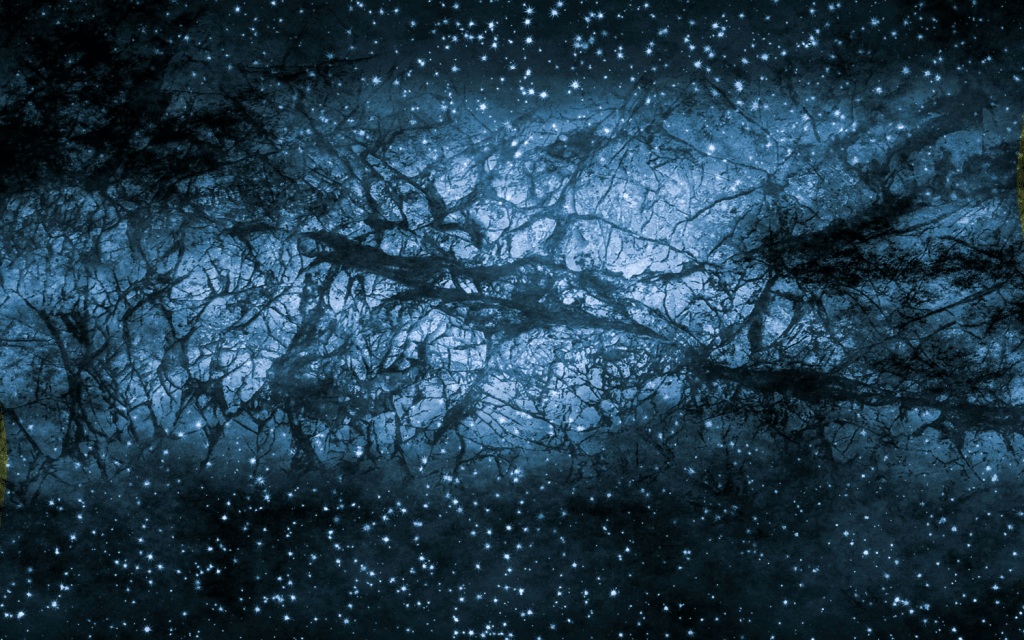
Without dark matter, galaxies would not have enough mass to hold themselves together, and they would fly apart. In addition, the universe would not have the observed large-scale structure, with clusters and superclusters of galaxies connected by vast filaments of dark matter.
Challenges in Detecting Dark Matter
Detecting dark matter directly is a significant challenge because it does not interact with light or any other form of electromagnetic radiation. Scientists have attempted to detect dark matter particles using a variety of techniques, including underground detectors, particle accelerators, and high-altitude balloons.
So far, these experiments have not produced definitive evidence of dark matter particles. However, the search for dark matter continues, with new experiments and techniques being developed all the time.
Dark Energy
In addition to dark matter, scientists have also discovered another mysterious substance called dark energy. Dark energy is a form of energy that is thought to be responsible for the accelerating expansion of the universe. Like dark matter, it is invisible and does not interact with light or any other form of electromagnetic radiation.
Scientists are still trying to understand the nature of dark energy and how it relates to dark matter and the evolution of the universe as a whole.
Distribution of Dark Matter in the Universe
Dark matter is distributed throughout the universe, forming a “cosmic web” of filaments and voids. The filaments are regions of high dark matter density where galaxies and galaxy clusters are located, while the voids are regions of low density where few or no galaxies exist.
The distribution of dark matter in the universe can be mapped using gravitational lensing, as well as computer simulations of the evolution of the universe. These maps provide important information about the structure and evolution of the universe and can help to test different theories of dark matter.
Evidence for Dark Matter
The existence of dark matter was first proposed in the 1930s by Swiss astronomer Fritz Zwicky, who noticed that the observed mass of the Coma cluster of galaxies was not sufficient to hold it together. Since then, numerous lines of evidence have confirmed the existence of dark matter, including the motion of galaxies within galaxy clusters, the rotation curves of galaxies, and the large-scale structure of the universe.
In addition, the cosmic microwave background radiation, which is the radiation left over from the Big Bang, provides strong evidence for the existence of dark matter. The patterns in the radiation are consistent with the predictions of the currently favored model of the universe, which includes dark matter and dark energy.
Dark Matter and Particle Physics
The search for dark matter is closely linked to particle physics, which studies the fundamental particles and forces that make up the universe. Many of the proposed candidates for dark matter particles, such as WIMPs and Axions, are predicted by theories of particle physics.
If dark matter particles exist, they could be produced in particle accelerators, such as the Large Hadron Collider, or detected through their interactions with ordinary matter in underground detectors or other experiments.
Theories of Dark Matter
There are several theories that attempt to explain the nature of dark matter. The currently favored theory is that dark matter is made up of weakly interacting massive particles (WIMPs), which are particles that interact very weakly with normal matter but have a mass similar to that of a proton.
Other proposed candidates for dark matter particles include axions, sterile neutrinos, and dark photons. These particles have different properties and interact with ordinary matter in different ways, so detecting them would require different experimental techniques.
Dark Matter and Gravitational Waves
Gravitational waves, which are ripples in the fabric of spacetime caused by violent cosmic events such as the collision of black holes, could provide another way to detect dark matter. If dark matter is made up of particles that are clumped together in dense structures called halos, these halos could produce gravitational waves when they collide or merge.
Although no gravitational waves from dark matter halos have been detected yet, future gravitational wave observatories such as the Laser Interferometer Space Antenna (LISA) could have the sensitivity to detect them.
The Search for Dark Matter Continues
Despite decades of research, the nature of dark matter remains a mystery. However, ongoing experiments and observations are providing new insights into this enigmatic substance and helping to test different theories of its nature.
The search for dark matter is a crucial area of research in astrophysics and particle physics, and could ultimately lead to a deeper understanding of the fundamental nature of the universe.
Conclusion
Despite decades of research, the exact nature of dark matter remains one of the biggest mysteries in astrophysics. However, ongoing efforts by scientists around the world are helping to shed light on this elusive substance and unravel the secrets of the universe.
 "Explore, Engage, and Embrace: Unleash the Curiosity within and Discover Your Universe of Activities!"